
Plantar aponeurosis
Plantar fasciitis
the complete guide
Plantar aponeurosis, also known as plantar fasciitis, is an inflammation of the fascia under the foot, often caused by excessive tension or repeated pressure. This condition manifests itself as a sharp pain in the heel area, particularly when taking your first steps in the morning or after a period of rest. Particularly at risk are runners, those wearing unsuitable footwear or those suffering from support disorders.
Understanding the causes of plantar fasciitis (or plantar aponeurositis) helps us better understand how it works and adopt appropriate solutions that respect the body and its natural movement.
What is plantar aponeurosis?
Plantar fasciitis is a painful inflammation of the plantar fascia, a fibrous band located on the bottom of the foot that connects the heel to the toes. It is usually caused by repeated microtears resulting from overuse, such as running, prolonged standing, or wearing ill-fitting shoes.
The main symptoms include a sharp pain in the heel, often felt on waking or after a period of rest, then subsiding with activity. This condition is common among athletes, overweight people and those with poor posture.
If left untreated, plantar fasciitis can evolve into plantar aponeurosis, which can lead to the formation of a calcaneal spur, a painful bony protrusion under the heel. Treatment includes rest, stretching, orthopedic inserts and, in some cases, medical therapies.
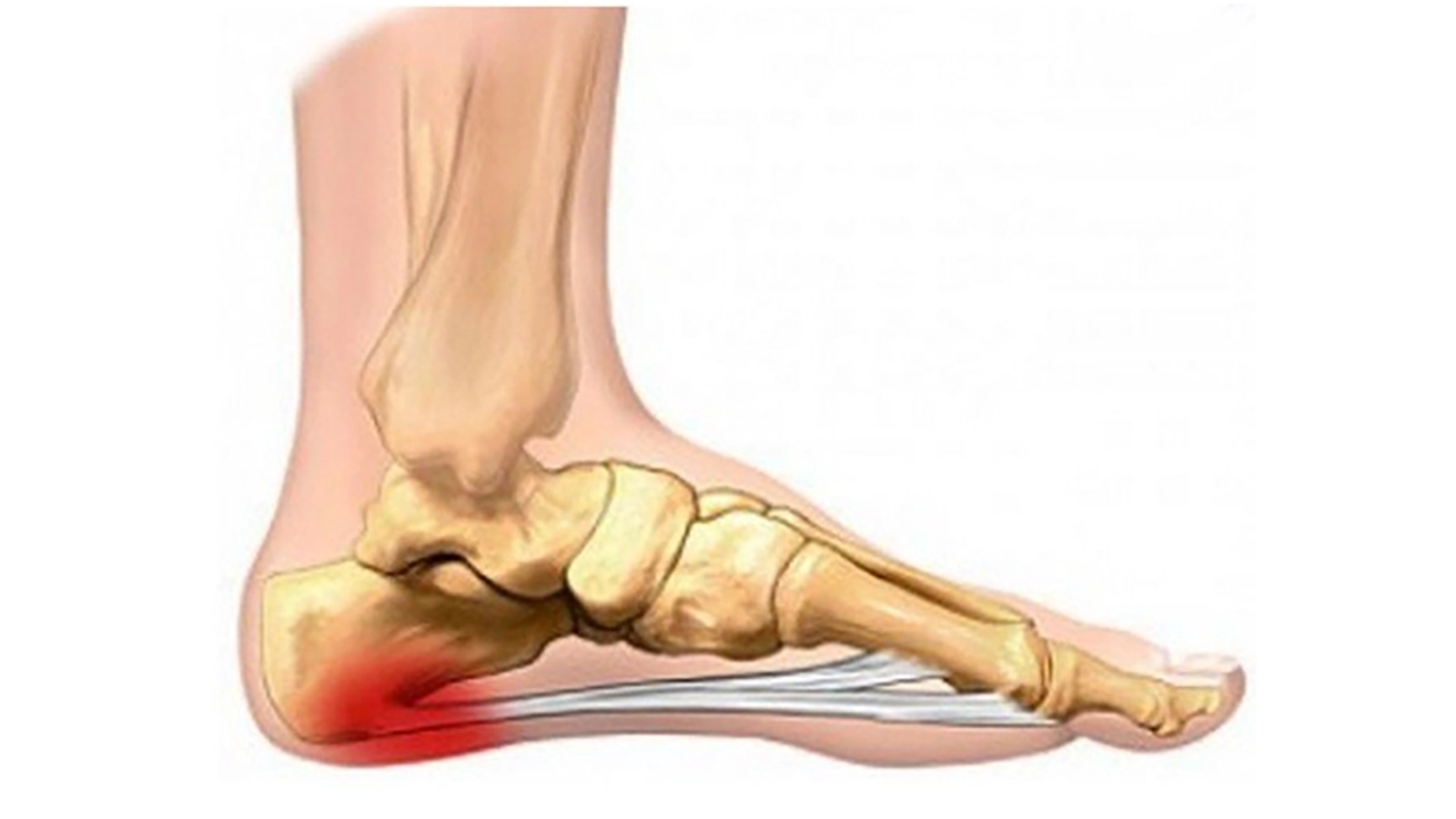
Plantar fasciitis or plantar aponeurositis: what's the difference?
Plantar aponeurositis and plantar fasciitis are two terms often used to refer to the same foot condition, which can be confusing.
Although they may seem different, they both refer to damage to the same anatomical structure: the plantar fascia.
To better understand these two terms and clarify their meanings, here is a comparison chart.
| Criterion | Plantar aponeurosis | Plantar fasciitis |
|---|---|---|
| Meaning | Plantar fascia injury | Plantar fascia injury |
| Affected department | Plantar fascia (under the foot) | Plantar fascia (same structure) |
| Origin of the term | French medical term | English/international term |
| Use of the term | More common in France | More common in sports and medical literature |
| Maintenance treatment | Support adjustments, stress reduction | Support adjustments, stress reduction |
| Actual medical difference | ❌ None | ❌ None |
Symptoms of plantar fasciitis
People with plantar fasciitis often describe:
- pain under the heel, especially when getting out of bed
- stiffness when resuming walking
- discomfort during prolonged standing
Where does the pain from plantar fasciitis occur?
Plantar fasciitis most often presents as pain localized under the heel, sometimes described as sharp or throbbing.
This pain often occurs upon waking, during the first few steps after a period of rest, and may then gradually subside with movement.
In some cases, the discomfort may:
- make it difficult to put weight on the heel when starting to walk
- reappear after standing for a long time
- worsen toward the end of the day or after an activity that puts a lot of strain on the foot
When mechanical stress persists, this pain can become chronic over time and occur more frequently, affecting one’s ability to walk comfortably on a daily basis.
Main symptoms
The symptoms of plantar fasciitis can vary from person to person depending on the intensity of the stress placed on the plantar fascia. They usually develop gradually and can change depending on activity levels, periods of rest, and how the feet are used in daily life.
Pain under the heel: Pain under the heel is the most characteristic symptom of plantar fasciitis. It is usually located at the bottom of the heel, where the plantar fascia attaches. This pain can feel sharp, stabbing, or deep, and is particularly noticeable when first putting weight on the foot.
Pain upon waking or after a period of rest: Many people describe experiencing significant pain when taking their first steps after getting out of bed or after a prolonged period of rest. This discomfort may gradually subside as they move around, only to return later in the day.
Feeling of stiffness in the sole of the foot: A feeling of stiffness under the foot may accompany the pain, particularly in the arch of the foot. This stiffness is often more noticeable in the morning or after a period of inactivity, and can make it uncomfortable to start walking again.
Pain influenced by activity and weight-bearing: Symptoms may be exacerbated by prolonged walking, standing, or activities that place heavy strain on the foot. Conversely, some people experience temporary relief from pain after a light warm-up, only for it to return later in the day.
Functional difficulties in daily life: When mechanical stress persists, plantar fasciitis can cause long-term discomfort when walking, affecting gait and comfort during daily activities.
The causes of plantar fasciitis
Plantar fasciitis most often results from excessive or repeated strain on the plantar fascia, the fibrous tissue that supports the arch of the foot. Several factors can contribute to its development, alone or in combination:
- repeated mechanical stress on the foot
- an imbalanced distribution of support
- improper footwear
- certain walking or activity habits
- Peculiarities of foot morphology
Repetitive mechanical stresses The plantar fascia is highly stressed with every step, particularly during the stance and propulsion phases. Prolonged walking, frequent standing, or activities involving repeated impacts can lead to progressive overloading of this tissue, promoting the onset of micro-tears and irritation.
Imbalance of foot support Uneven weight distribution on the foot can increase the strain on the plantar fascia. When certain areas, particularly the heel or the forefoot, bear excessive load, the arch of the foot is more stressed, which can contribute to the development of plantar fasciitis.
Inappropriate footwear: Wearing shoes that are poorly suited to the foot's morphology or the activity being performed can play a significant role. Shoes that are too rigid, lack sufficient cushioning, or are ill-fitting can alter the natural gait mechanics and increase the stress placed on the plantar fascia.
Particularities of foot morphology: Certain body types can lead to increased stress on the plantar fascia. Flat feet, high arches, or a heavily stressed arch can cause greater tension on this tissue during walking or prolonged standing.
Movement habits and activity rhythm: Too rapid a return to activity, a sudden increase in walking or sports volume, or poorly adapted repetitive movements can also contribute to the onset of plantar pain. These changes stress the aponeurosis without allowing the foot time to adapt gradually.
What are the treatment options for plantar fasciitis?
The treatment of plantar fasciitis primarily involves a progressive approach aimed at reducing stress on the fascia and improving comfort when bearing weight. Several methods can be considered, either alone or in combination, depending on the severity of symptoms and lifestyle habits.
Relative position and adaptation of activity: A temporary decrease in activities that heavily stress the foot often helps reduce the tension on the plantar fascia. This doesn't necessarily mean a complete stop, but rather an adjustment of pace and demands to allow the foot time to recover.
Foot Stretches and Mobility: Stretching exercises targeting the arch of the foot, calf, and Achilles tendon can help improve tissue flexibility and reduce foot pain. This approach aims to promote better mobility and a more comfortable return to walking.
Refrigeration application Applying cold to the heel can be used to alleviate localized discomfort, particularly after a prolonged period of walking or strenuous activity. This method is part of a strategy for managing occasional painful sensations.
Footwear adaptation: Choosing appropriate footwear plays an important role in managing plantar fasciitis.
Footwear offering good support, adequate cushioning, and proper stability limits the repeated mechanical stress on the arch during impacts.
Medical support if necessary: When symptoms persist or worsen, medical advice may be recommended to assess the situation and guide towards appropriate management. The goal remains to identify contributing factors and adjust the solutions implemented.
Plantar fasciitis is not just about the arch of the foot. It is often part of an overall foot balance, where posture, mobility, and how weight is distributed play an essential role. The foot is the base of this chain. When ground contact is unbalanced or excessively stressed, the plantar arch can experience repeated strain, influencing the dynamics of walking and daily movements, to the point of impacting overall comfort during mobility.
It all starts with the foot.
In this context, some people choose to act on their movement base.
Insoles designed to improve stride quality can help distribute the forces exerted under the arch more harmoniously, particularly during walking or daily activities.
It's not about treating a pathology, but about supporting movement by providing a more stable base that is more consistent with the natural biomechanics of the foot.
Do you play a sport and have questions about your footwork?
Select your activity to discover New Equilibre insoles designed to support movement.
Acting on supports: the role of footings
How do insoles affect the foundation of movement?
Influence on foot pressure distribution: The insoles are designed to support the foot in its functional position and promote a more consistent distribution of pressure. By acting directly at the base of movement, they can help limit areas of overexertion in the arch and heel.
Mechanical stress distribution: By improving contact with the ground, insoles contribute to a more even distribution of mechanical stresses on the foot. This approach aims to reduce repetitive strain on certain sensitive areas, particularly during walking or prolonged standing.
Stability while walking A more stable foundation promotes smoother, better-controlled walking. The insoles support the natural rolling motion of the foot and contribute to a continuity of movement, without stiffening or restricting each person's own biomechanical dynamics.
Ground Impact Management The materials used in the design of the insoles help to absorb the impact when coming into contact with the ground, particularly during heel strike. This impact management is part of a functional comfort approach, especially during daily activities involving walking or prolonged standing.
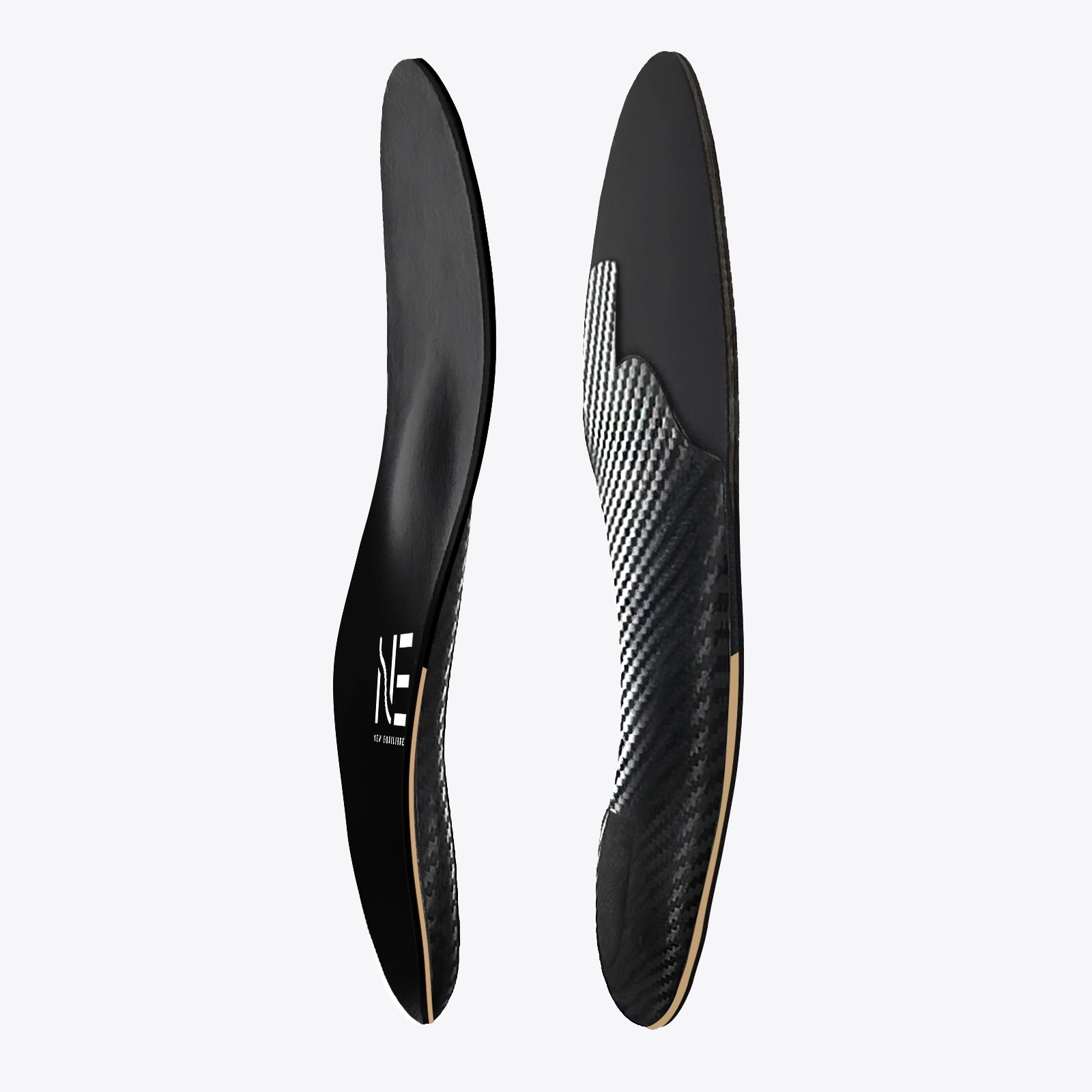
New Equilibre Insoles
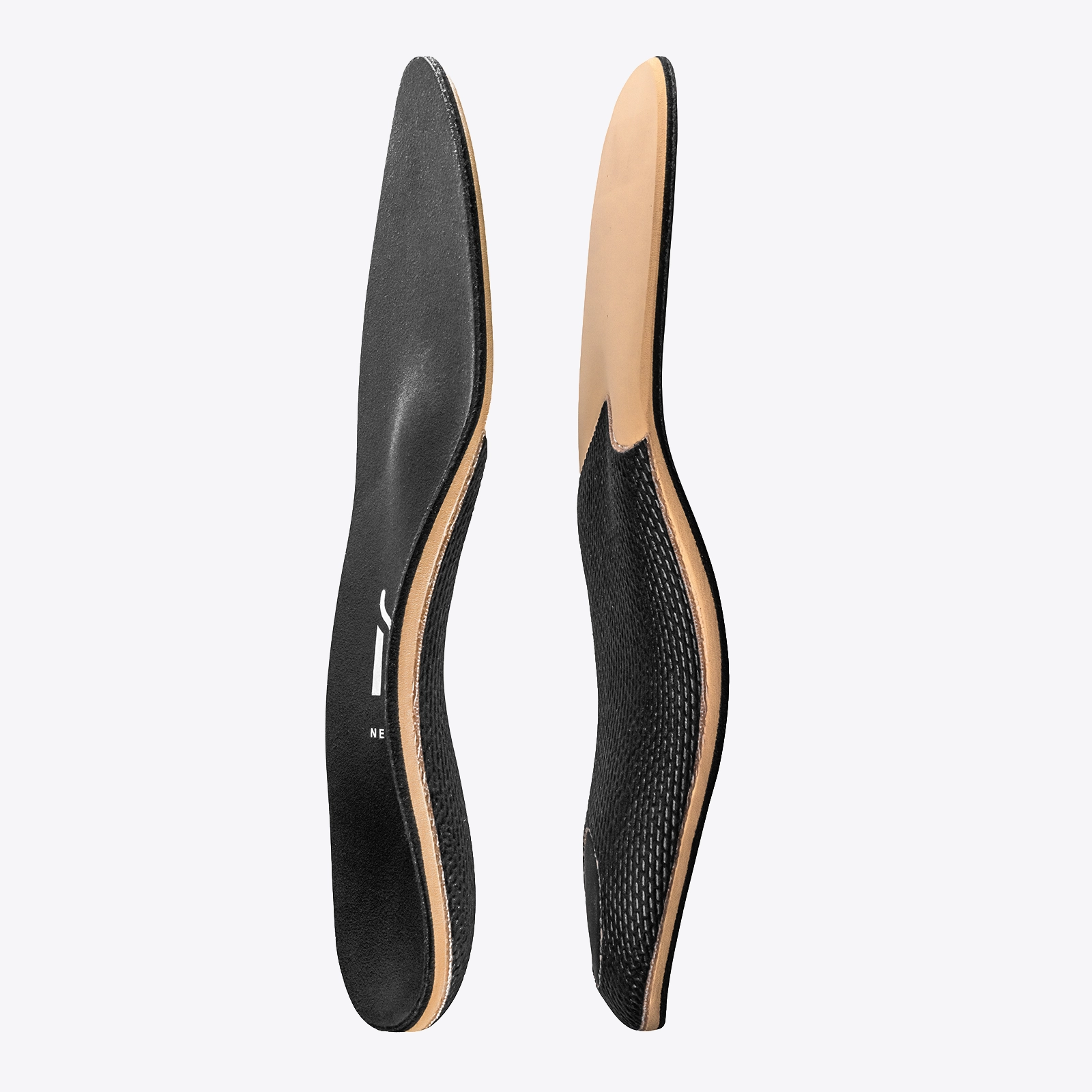
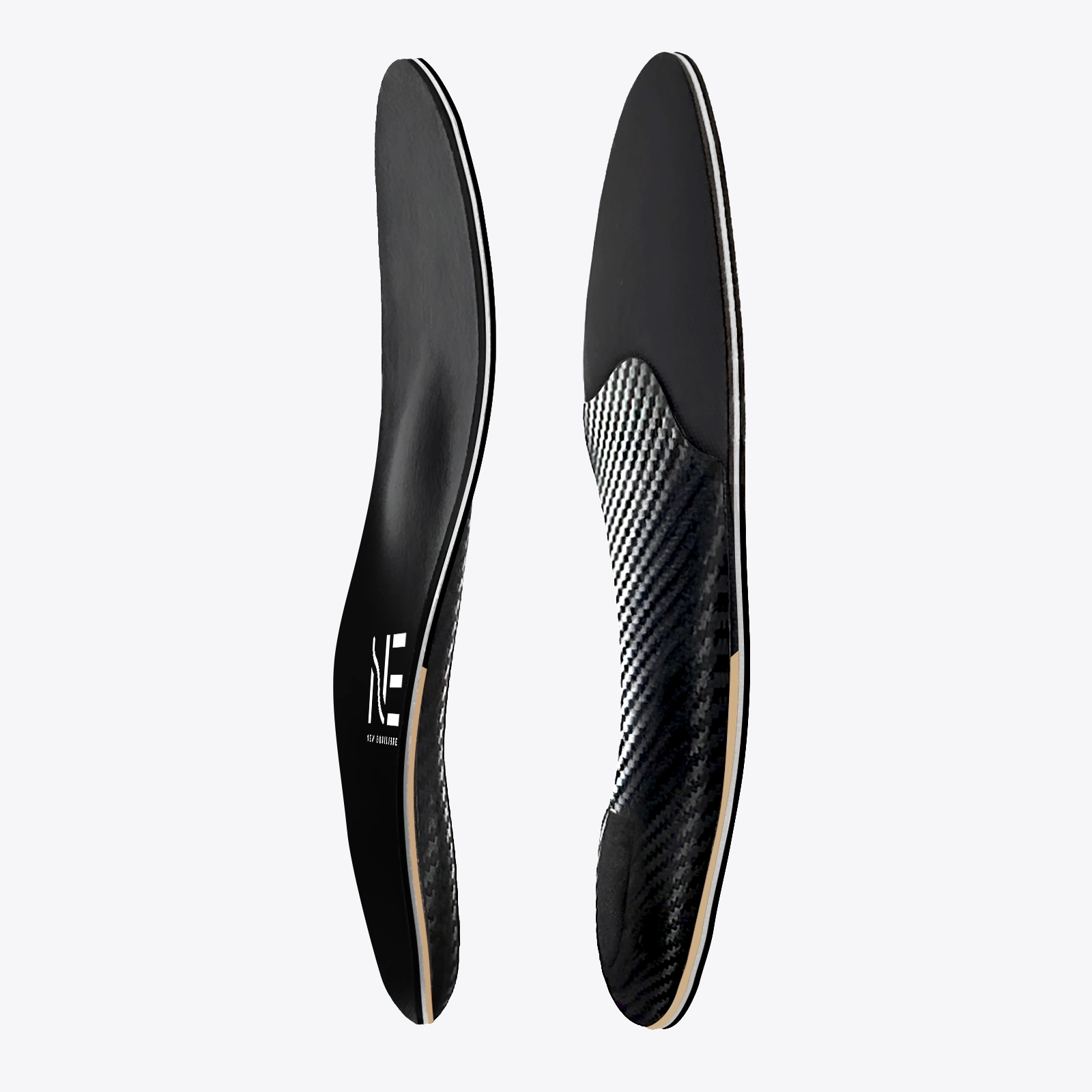
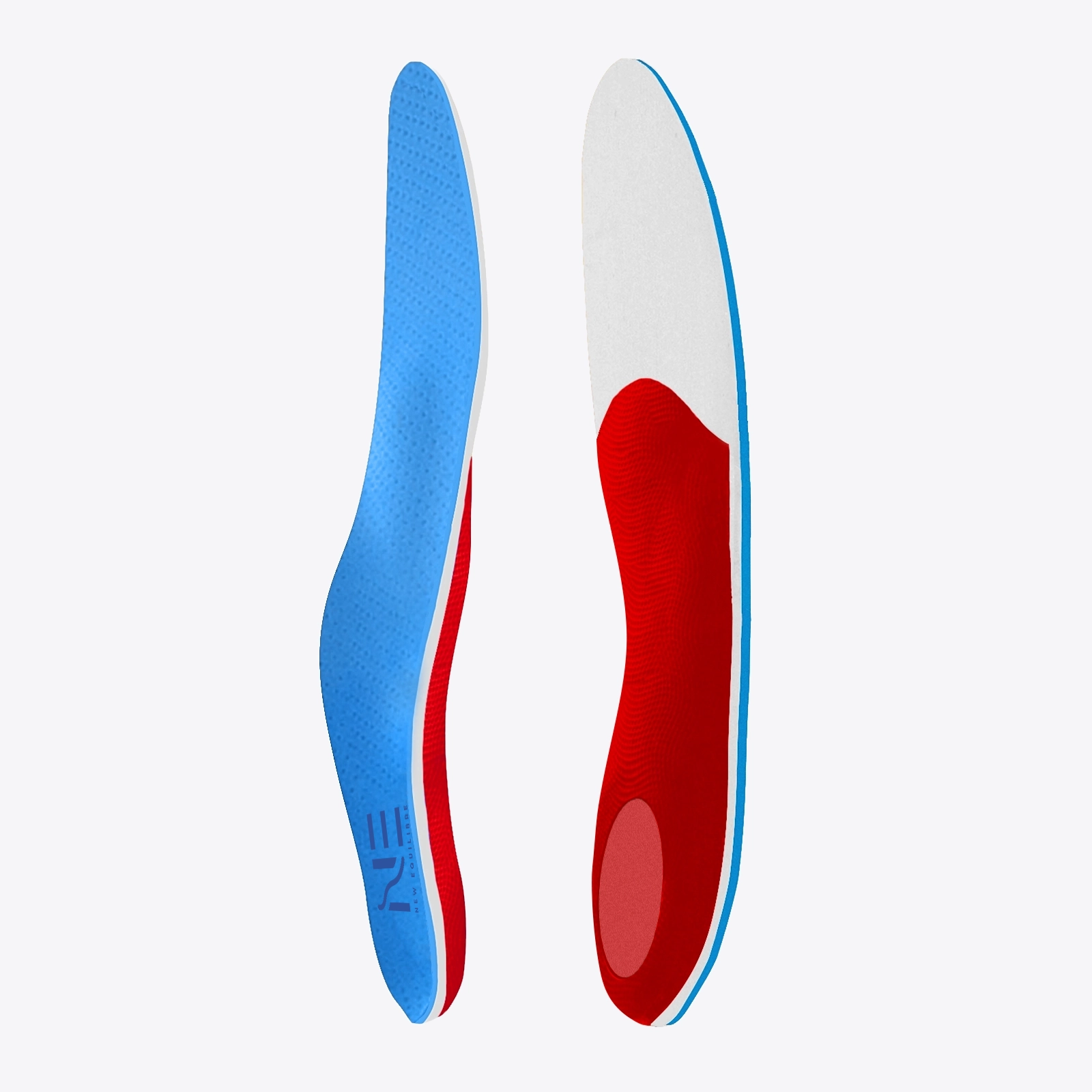
The New Equilibre Insoles They are designed based on over 35 years of biomechanical foot analysis in orthopedic practices. They easily fit into everyday or sports shoes and aim to support movement while respecting the natural anatomy of the foot.
«It all starts with the foot.»
New Balance, a new impetus.
FAQ - Frequently Asked Questions for Plantar Fasciitis:
Les semelles orthopédiques sont-elles efficaces contre l'aponévrosite plantaire ?
Oui, lorsqu’elles sont adaptées à votre morphologie et à votre activité. Les semelles permettent de mieux répartir les pressions sous le pied, de soutenir la voûte plantaire et de limiter les tensions exercées sur l’aponévrose plantaire. Elles constituent l’un des traitements les plus fréquemment recommandés lorsque l’origine de la douleur est mécanique.
Une aponévrosite plantaire peut-elle revenir ?
Oui. Sans correction des facteurs favorisants (chaussures inadaptées, surcharge, défaut d’appui, reprise trop rapide du sport…), une récidive est possible. Adopter de bonnes habitudes et porter des semelles adaptées lorsque cela est nécessaire permet souvent de réduire ce risque.
Peut-on continuer à marcher avec une aponévrosite plantaire ?
Oui, marcher reste généralement possible. En revanche, si la douleur est importante, il est conseillé de limiter les longues marches et les activités qui aggravent les symptômes. Porter des chaussures offrant un bon maintien et utiliser des semelles adaptées peut contribuer à diminuer les contraintes exercées sur l’aponévrose plantaire.
Peut-on courir avec une aponévrosite plantaire ?
Si la douleur est légère, certains sportifs peuvent continuer à courir en adaptant leur entraînement. En revanche, une douleur importante au talon doit inciter à réduire temporairement la course à pied. Continuer à courir malgré une douleur intense risque d’entretenir l’inflammation et de prolonger la guérison.
Combien de temps dure une aponévrosite plantaire ?
La durée varie selon les personnes et la gravité de l’inflammation. Les premiers signes d’amélioration peuvent apparaître après quelques semaines, mais une guérison complète peut nécessiter plusieurs mois. Continuer à solliciter le pied sans corriger la cause mécanique peut ralentir considérablement la récupération.
Peut-on guérir d'une aponévrosite plantaire sans traitement ?
Oui, certaines aponévrosites plantaires peuvent s’améliorer avec le temps, notamment en réduisant les activités qui sollicitent fortement le pied. Toutefois, sans prise en charge adaptée, la douleur peut persister plusieurs mois, voire devenir chronique. Une prise en charge précoce permet généralement de retrouver un meilleur confort plus rapidement.
How long does it take to heal plantar aponeurosis?
The healing time for plantar fasciitis varies considerably, depending on a number of factors. Generally, with effective treatment such as daily orthopedic insoles, pain can be relieved within a few days. However, with drug or physiotherapeutic treatments, most patients see a significant improvement in their symptoms within three to six months. In some cases, full recovery can take up to a year or more.
It is very important to note that healing is often gradual. Affected people generally begin to experience a reduction in pain before regaining full function of their foot. It is therefore essential to remain patient, to follow treatment rigorously and to wear orthopedic inserts on a daily basis.
Les étirements sont-ils utiles ?
Oui. Les étirements des mollets, du tendon d’Achille et de l’aponévrose plantaire font partie des exercices les plus recommandés. Réalisés régulièrement, ils peuvent améliorer la souplesse du pied et réduire les tensions responsables de la douleur.
What kind of shoes can I wear with plantar fasciitis?
In general, it's important to choose comfortable shoes that offer good arch support, adequate cushioning and good stability to relieve plantar fasciitis symptoms. It is also advisable to avoid shoes that are too flat or have high heels, which can aggravate this condition.
- Cushioned running shoes: Opt for running shoes specially designed to absorb shock and provide good support for the arch of the foot. Look for models with an EVA foam or gel midsole for extra cushioning.
- Walking shoes : Choose walking shoes with good arch support and heel cushioning. Look for models with a thick, flexible outsole to reduce pressure on the plantar fascia.
- Orthopedic shoes : If you suffer from severe plantar fasciitis, you may want to consider custom-made orthopedic shoes. These shoes are specially designed for your foot and can offer optimal support and pain relief.
- Shoes with removable insoles : Opt for shoes with removable insoles so you can replace them with New Equilibre orthopedic insoles specially adapted to your activity to relieve plantar fasciitis.
- Shoes with good arch support: Look for shoes that offer good arch support to reduce tension on the plantar fascia. Shoes with gel or memory foam inserts can be particularly beneficial.
- Shoes with a slightly raised heel: Shoes with a slightly raised heel can help reduce tension on the plantar fascia by promoting a more neutral foot position.

Article rédigé par Forlini Orthopedie
Spécialiste de la fabrication de semelles orthopédiques
- Plus de 35 ans d’expérience dans la prise en charge du pied (depuis 1988)
- Plus de 5000 patients accompagnés chaque année en cabinet.
- À l’origine du développement des semelles New Equilibre