
Dorsalgia
the complete guide
- Published on
- By New Equilibre
SUMMARY :
When back pain, commonly referred to as dorsalgia, sets in, it can quickly become a real obstacle in daily life. This pain, located in the dorsal region of the spine, can significantly impact your quality of life and your ability to carry out your usual activities. Whether it's for work, household chores, physical activity, or simply enjoying a moment of relaxation, persistent back pain can limit your movements, cause constant discomfort, and even affect your mood and overall well-being.

In this comprehensive guide, we will examine the symptoms, treatments, the use of orthopedic insoles, the most affected areas by back pain, how to identify the source of your back pain, as well as the available examinations for an accurate diagnosis.
What is back pain?
Back pain is a condition characterized by pain felt in the dorsal region of the spine, meaning the middle of the back. This pain can vary in intensity and nature, ranging from a feeling of stiffness or muscle tension to sharp, throbbing pain.
What are the symptoms of back pain?
Dorsalgia is characterized by pain in the dorsal region of the spine, meaning the middle of the back. Symptoms can vary in intensity and nature, but may include:
- Persistent or intermittent pain in the middle of the back
- Muscle stiffness or tension in the upper back
- Burning or tingling sensation
- Difficulty moving or standing for long periods
What treatments are available for mid-back pain?
Treatments for upper back pain can vary depending on the underlying cause of the pain. They may include medical and natural approaches:
Medicinal treatments
- Over-the-counter pain relievers
- Anti-inflammatories to reduce inflammation
- Muscle relaxants to relax tense muscles
Natural treatments :
- Strength and stretching exercises to improve posture and stability
- Complementary medicine such as acupuncture or chiropractic
- Physical therapy to strengthen back muscles and improve mobility
Orthotic insoles to relieve back pain
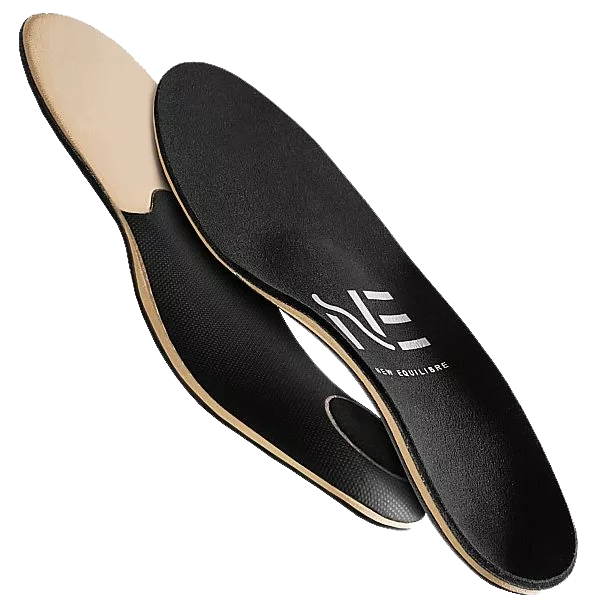
Thermoformed orthotic insoles can also be very effective in relieving back pain. New Equilibre insoles provide optimal support for the medial, lateral, and anterior arches of the foot, increasing your contact surface area. This helps rebalance your posture, reducing lumbar lordosis and relieving excessive muscle and tendon tension.
Insoles also reduce pressure on the spine and improve body alignment, which contributes to effective pain relief.
New Equilibre insoles have been tested and approved by thousands of users. Their effectiveness is clinically proven. It's easy to order your insoles exclusively from our online store, and regain the comfort your feet deserve.
Free delivery to Metropolitan France, within 2 working days.
Free returns within 14 days.

Where do back pains most often occur?
Back pain is generally located in the middle region of the spine, between the shoulder blades. However, it can also radiate to other parts of the body, including the shoulders, arms, and even the legs in some cases.
What are the causes of back pain?
Back pain can be caused by various factors, including:
Poor posture Incorrect posture for extended periods, such as leaning forward or sitting in an uncomfortable position, can lead to strain and pain in the back region.
Injuries: Injuries such as muscle sprains, ligament strains, or vertebral fractures can also cause back pain.
Spinal disorders Conditions such as osteoarthritis, herniated discs, scoliosis, or spondylolisthesis can affect the spine and lead to back pain.
Overuse Activities that excessively strain the back muscles, such as lifting heavy objects improperly, can cause back pain.
Psychological factors: Stress, anxiety, and depression can contribute to muscle tension and increase pain sensitivity in the back region.
How to know where my upper back pain is coming from?
It is essential to determine the source of your back pain for effective treatment. Here are some clues for identifying the underlying cause:
How to know if my back pain is inflammatory?
Inflammatory pain is often accompanied by redness, swelling, and tenderness in the affected area.
Constant and persistent pain Inflammatory pain tends to be continuous and constant, rather than improving with rest as is sometimes the case with mechanical pain.
Morning stiffness If you experience severe and prolonged stiffness in your back upon waking in the morning, which gradually improves throughout the day, it could be a sign of inflammation.
Nighttime pain Pain from inflammation can worsen at night, which can disrupt your sleep and wake you up.
Touch sensitivity Your back may be sensitive to touch in the affected areas, and pressure on these areas may worsen the pain.
Swelling In some cases, severe inflammation can cause swelling in the affected area.
Pain associated with other inflammatory symptoms: If your back pain is accompanied by other inflammatory symptoms, such as fever, fatigue, unexplained weight loss, or joint pain, it may indicate an inflammatory cause.
How to know if my back pain is muscular?
Muscle pain can be worsened by movement and may be accompanied by muscle tension and stiffness.
Localized pain: Muscle pain is often localized to a specific area of the back, rather than spreading throughout the entire back region.
Pain exacerbated by movement Muscle pain can be aggravated by certain movements or activities, such as bending forward, twisting, or lifting heavy objects.
Muscle tension You may feel a sensation of muscle tension or stiffness in the affected area, and the muscles may feel tight to the touch.
Pain following physical exertion Muscle pain can occur after intense physical exertion, unusual exercise, or prolonged activity.
Absence of inflammatory symptoms Unlike inflammatory pain, muscle pain is generally not associated with signs of inflammation such as swelling, redness, or heat in the affected area.
Response to rest and muscle treatments: Muscle pain tends to improve with rest, gentle stretching, and treatments such as massage or heat application.
How to know if my back pain is bone-related?
Bone pain can feel like a deep, dull ache and may be worsened by pressure on the affected area.
Deep, dull ache Bone pain tends to be deep and dull, rather than sharp or throbbing.
Constant pain: Unlike muscle pain, which can fluctuate in intensity, bone pain tends to be constant and persists even at rest.
Pain worsened by activity Bone pain can be worsened by certain activities or movements, including lifting heavy objects, prolonged walking, or bending forward.
Pressure sensitivity You may feel increased tenderness or pain when pressing on the affected area, which can indicate irritation or inflammation of the bones.
Nighttime pain Bone pain can be more pronounced at night, which can disrupt your sleep and wake you up.
Other bone symptoms: In addition to pain, you may also experience other symptoms associated with bone disorders, such as fractures or joint problems, such as cracking or grinding during movement.
What exam for back pain?
To determine the underlying cause of low back pain and develop an appropriate treatment plan, various examinations may be necessary. Here are some of the examinations commonly used to evaluate low back pain:
Podiatric examination: An orthopedist can perform specific tests to assess spinal stability, mobility, and alignment, as well as to identify any deformities or structural abnormalities.
Physical examination: During a physical examination, a healthcare professional may assess your posture, range of motion, muscle strength, and perform specific tests to identify areas of pain and tenderness.
Medical imaging Medical imaging techniques such as X-rays, MRIs (magnetic resonance imaging), or CT scans can be used to visualize the structure of the spine and identify any underlying abnormalities, such as a herniated disc, arthritis, or a vertebral fracture.
Electromyography (EMG): EMG is a test that evaluates the electrical activity of muscles. It can be used to diagnose neuromuscular disorders that may contribute to back pain.
Laboratory analyses: In some cases, blood tests may be necessary to assess inflammation levels or identify other underlying medical conditions that may contribute to back pain.
Neurological evaluation A neurological evaluation can be performed to assess nerve function and identify any signs of nerve compression or dysfunction that could be contributing to back pain.
Based on the results of these exams and the clinical evaluation, your healthcare provider will be able to develop a personalized treatment plan to manage your back pain and improve your quality of life. It is important to consult a qualified healthcare professional for an accurate diagnosis and appropriate treatment recommendations.
Article written by
Forlini Orthopedics
Spécialiste de la fabrication de semelles orthopédiques
- Plus de 35 ans d’expérience dans la prise en charge du pied (depuis 1988)
- Plus de 5000 patients accompagnés chaque année en cabinet.
- À l’origine du développement des semelles New Equilibre