
Sever's disease
the complete guide
- Published on
- By New Equilibre
SUMMARY :
Sever's disease, also known as calcaneal apophysitis, is one of the most common causes of heel pain in growing children. This growth-related heel pain typically appears between the ages of 8 and 15, when the calcaneus, the heel bone, is still developing. Subjected to repetitive traction from the Achilles tendon, the growing cartilage can become inflamed, causing significant discomfort when walking, during sports activities, or even with simple weight-bearing.
This inflammation is particularly common in active children, especially in high-impact sports like soccer, running, or basketball. Overuse, excessive foot mobility, hard landings, or ill-fitting shoes can worsen the pain.
Although benign, this pathology can become very disabling on a daily basis if it is not taken into account.
Understanding Sever's disease helps to better identify the mechanisms involved, adapt physical activity, and implement effective solutions to relieve heel pain, improve comfort, and prevent recurrence.
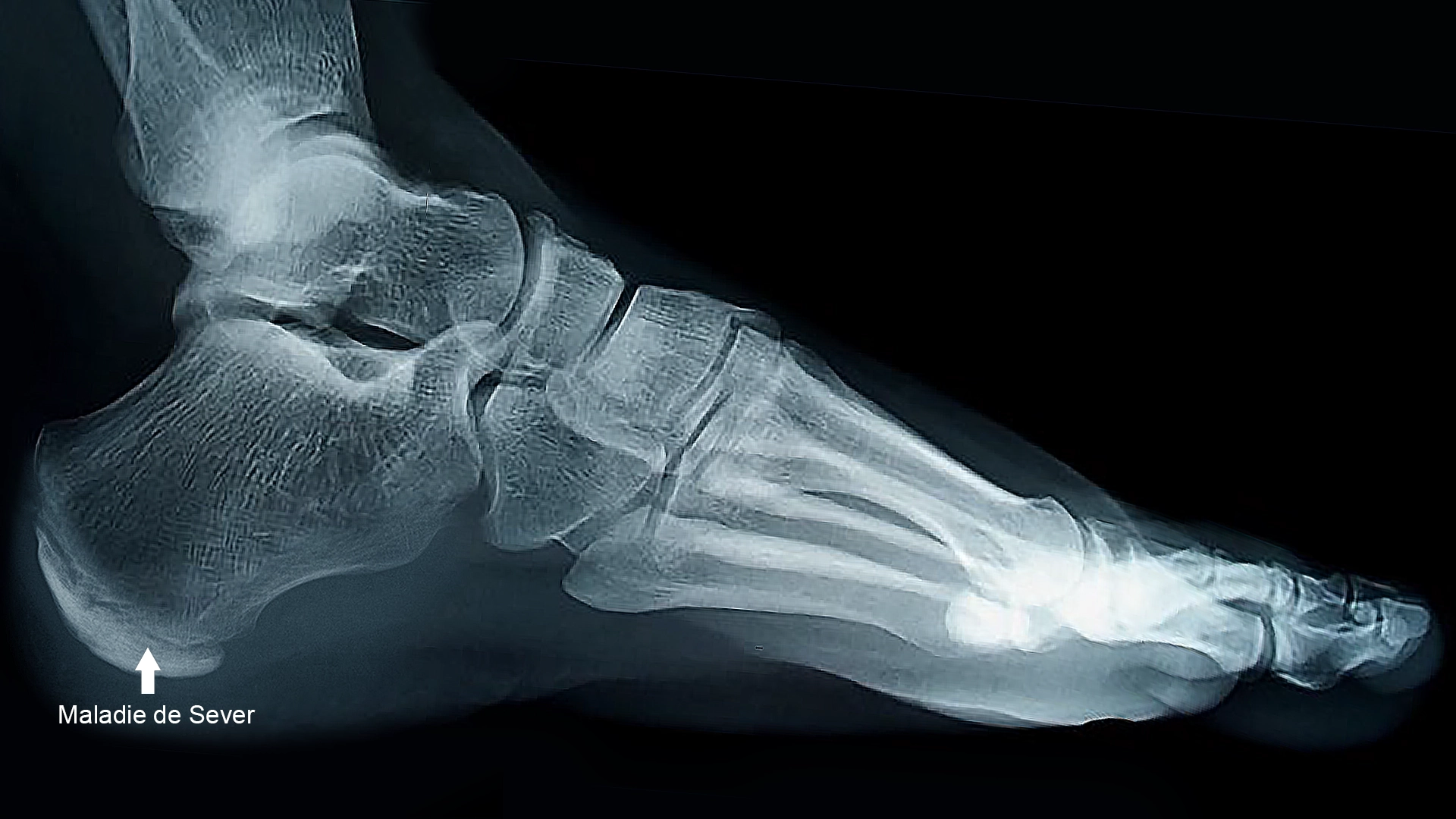
In this comprehensive guide, we will explore the causes, symptoms, treatments, and prevention strategies, as well as the benefits of custom orthotics. 👣
What is Sever's disease?
Sever's disease is characterized by inflammation of the growth plate located at the back of the calcaneus, the heel bone, leading to progressive pain and discomfort during walking or sports activities. This condition generally occurs in young athletes participating in high-impact sports such as running, jumping, or disciplines requiring rapid changes in direction.
Diagnosis is based on a clinical examination and may be supplemented by an X-ray to rule out other conditions. Although benign, this condition requires appropriate management to prevent symptom worsening and slow recovery. Solutions include wearing suitable footwear and using orthotic insoles to improve support and limit pressure on the heel.
Why does it occur during growth?
Between the ages of 8 and 15, bones grow faster than muscles and tendons.
Consequence: The Achilles tendon pulls more on the heel, increasing tension and causing inflammation.
It's a natural mechanism linked to growth, but amplified by physical activity.
What are the symptoms of Sever's disease?
Growing pains typically manifest as:
Most frequent symptoms
• Sharp or diffuse pain in the heel
• Lateral heel pressure sensitivity
• Discomfort when walking or running
• Intermittent lameness
• Pain that increases after sports activity
• Achilles tendon stiffness
How does the pain evolve?
The pain often appears:
• after practices
• during jumps or accelerations
• Sustained pressure on a hard surface
• upon waking in the morning, due to Achilles tendon tension
The pain usually disappears when growth stops, but it can last for several months if the support or the intensity of sport is not adapted.
The 100% Made in France solution
Order your insoles to relieve your heel pain in just a few clicks via our online shop!
Fast, free delivery to mainland France.
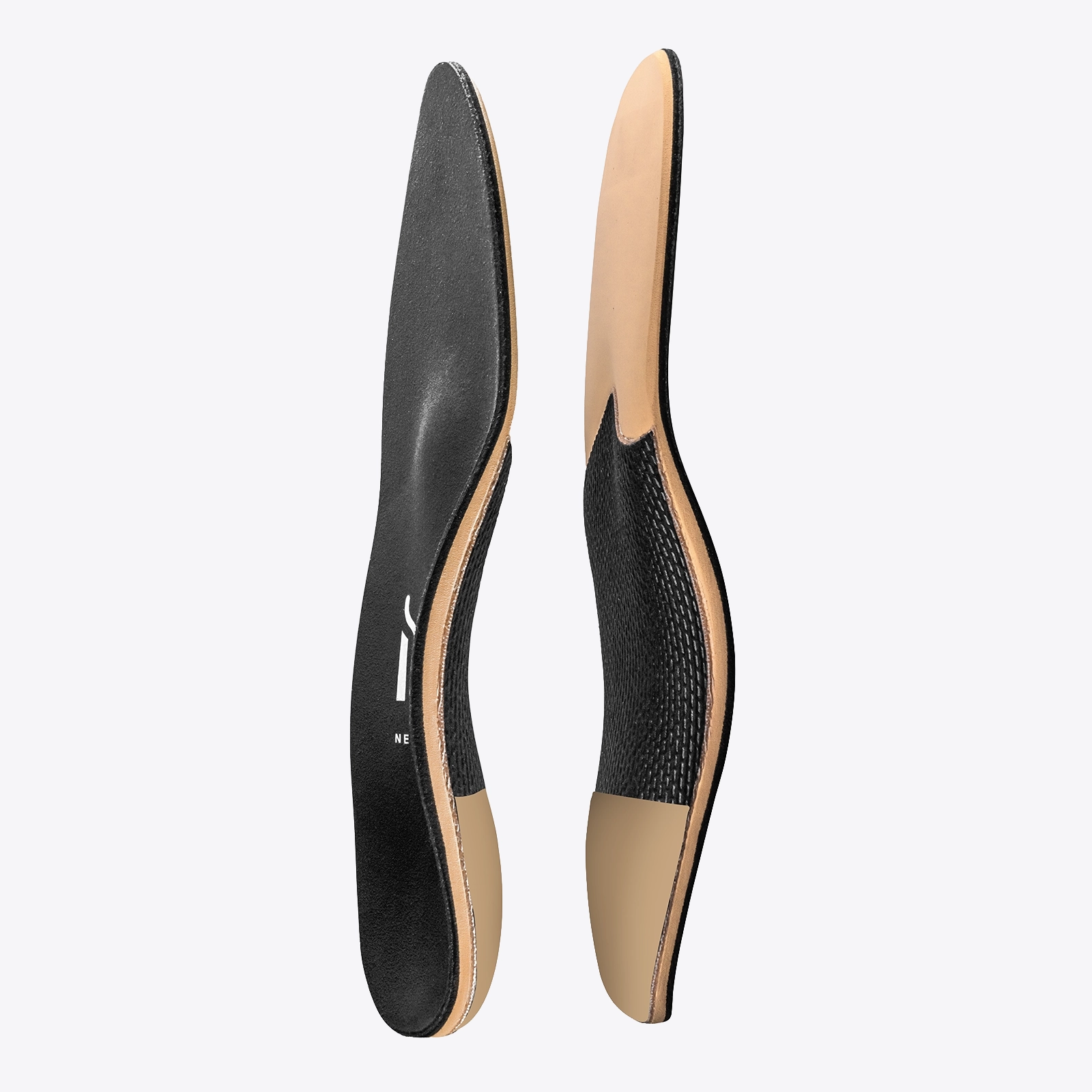
Orthopedic insoles to relieve Sever's disease
Thermoformed orthopedic insoles can also be very effective in relieving Sever's disease. We have designed New Equilibre insoles specifically for this condition. They provide optimal support for the inner, outer, and front arches of the foot, increasing your support surface by 100%. This rebalances your posture, reducing the pressure exerted on the growth plate. They also help to correct any postural imbalances that could aggravate the condition. They provide additional support at the rear of the foot to ensure optimal heel cushioning, effectively relieving the inflammation associated with Sever's disease.
New Equilibre insoles have been tested and approved by thousands of users. Order your insoles Sever's disease exclusively in our online store, and rediscover the comfort your feet deserve.
Free delivery to Metropolitan France, within 2 working days.
Free returns within 14 days.
What are the treatments for Sever's disease?
The treatment for Sever's disease generally aims to relieve pain, reduce inflammation, and promote healing of the heel's growth plate. Here are some common treatment options for Sever's disease:
- Rest and reduced high-impact physical activity Limiting activities that worsen Sever's disease symptoms, such as running, jumping, or high-impact sports, can help reduce pressure on the heel and relieve pain. Rest also helps promote healing in the affected area.
- Ice application Applying ice to the heel for about 15 to 20 minutes several times a day can help reduce inflammation and relieve pain. It is recommended to wrap the ice in a towel or cloth to prevent skin burns.
- Stretching and muscle strengthening Stretching and strengthening exercises for the calf muscles can help reduce the tension on the heel and strengthen the surrounding muscles. Targeted calf muscle stretches, such as for the Achilles tendon, can be particularly beneficial.
- Support shoes Wearing well-fitting athletic shoes with good cushioning and arch support can help reduce pressure on the heel and relieve pain. Avoid flat or unsupportive shoes, which can worsen symptoms.
- Anti-inflammatory drugs In case of intense pain, over-the-counter anti-inflammatory medications, such as ibuprofen or naproxen, may be recommended to reduce inflammation and relieve pain. It is important to follow the doctor's or pharmacist's instructions when taking these medications.
- Orthotic insoles Orthotic insoles are highly recommended to provide extra heel support and reduce pressure on the heel's growth plate. In addition to offering optimal comfort, they also help correct any postural imbalances that could worsen the condition.
It is recommended to consult a doctor or healthcare professional for an accurate diagnosis and advice on the best treatment options for Sever's disease. A healthcare professional will be able to recommend personalized treatment measures based on the severity of the symptoms and the individual condition of each child.
Is Sever's disease serious?
Sever's disease is generally not considered serious and often resolves on its own as the child grows and the heel bone strengthens. However, it can cause temporary pain and limitations in active children, often requiring pain relief measures and a temporary reduction in physical activities.
While it can cause heel pain, difficulty walking, or engaging in physical activities, it generally does not cause long-term permanent damage. The condition tends to resolve on its own as the child grows and the heel bone strengthens.
Overall, with appropriate treatment such as wearing orthotic insoles and taking adequate precautions, Sever's disease can be managed effectively and quickly. Children can often resume their normal activities as soon as symptoms improve.
How long does Sever's disease last?
The duration of Sever's disease can vary from person to person, but generally, it is considered a temporary condition that usually resolves with time. Sever's disease often occurs in children aged 8 to 14 years during periods of rapid growth, and it is usually related to the gradual closure of the heel growth plate.
In most cases, the symptoms of Sever's disease gradually improve over time as the heel bone heals and the traction on the growth plate decreases. It can take a few weeks to a few months for symptoms to completely disappear.
However, it is important to note that the duration of Sever's disease can be influenced by several factors, including the severity of symptoms, the treatment measures taken and adherence to medical recommendations, as well as the child's individual growth. In some cases, symptoms may persist longer, especially if appropriate treatment measures are not taken or if the child continues to engage in physical activities that exacerbate the symptoms without wearing appropriate orthotic insoles.
What sports are permitted with Sever's disease?
Although Sever's disease can cause heel pain in active children, it is often possible to continue participating in certain sports and physical activities that do not worsen symptoms. Here are some sports that are generally considered safe for children with Sever's disease:
Swimming Swimming is a low-impact sport that eases joints and muscles while strengthening the body. It generally does not place excessive stress on the heel and can be safely practiced by children with Sever's disease.
Cycling Cycling is a low-impact activity that strengthens leg muscles without stressing the heel. It can be done outdoors or on a stationary bike.
Yoga and Pilates These muscle-strengthening and flexibility activities can help improve posture and strengthen muscles without putting excessive pressure on the heel.
Walk Walking is a simple and effective way to stay active while keeping low pressure on the heel. Regular walking can help maintain overall health and strengthen muscles without worsening Sever's disease symptoms.
Gentle gymnastics Certain forms of gentle exercise, such as stretching and light muscle strengthening exercises, can be beneficial for children with Sever's disease by strengthening muscles without putting pressure on the heel.
However, wearing thermoformed orthotic insoles is the most effective way to relieve the pathology and thus be able to continue practicing in-demand sports such as soccer, rugby, tennis, or running.
Article written by
Forlini Orthopedics
Orthotic insole manufacturing specialist
- Over 35 years of experience in foot care (since 1988)
- More than 5,000 patients supported each year in practice.
- At the origin of the development of New Equilibre insoles