0

Bowlegs

the complete guide

The tarsal coalition, often linked to tarsal coalition, is a condition that affects foot alignment and can lead to Pain and some posture problems. This condition can affect gait and quality of life. In this article, we will explore the underlying causes of varus foot in detail, the associated symptoms and the various solutions to correct alignment and promote comfort.

What is a clubfoot?

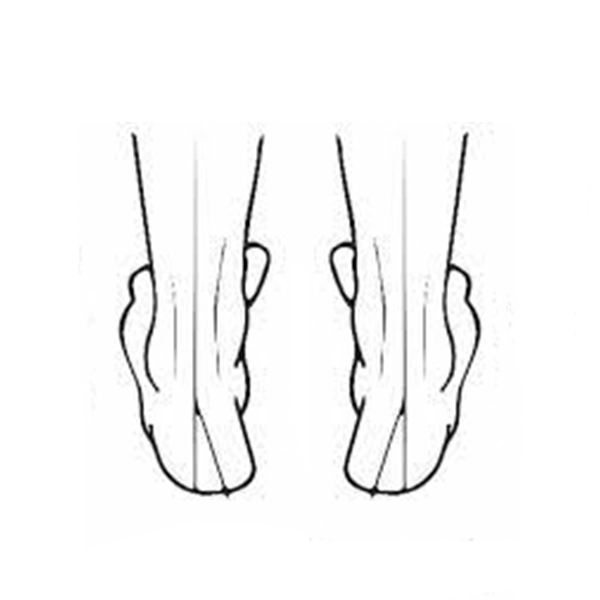
Conversely, Flatfoot,The varus foot is characterized by a more pronounced arch, leading to supination of the foot. The heel tends to tilt outward, concentrating pressure on the outer edge of the foot and disrupting the natural alignment between the hindfoot and the forefoot. This imbalance can limit shock absorption and promote excessive stress during walking or running.

Photo of Varus' feet
Bow legs
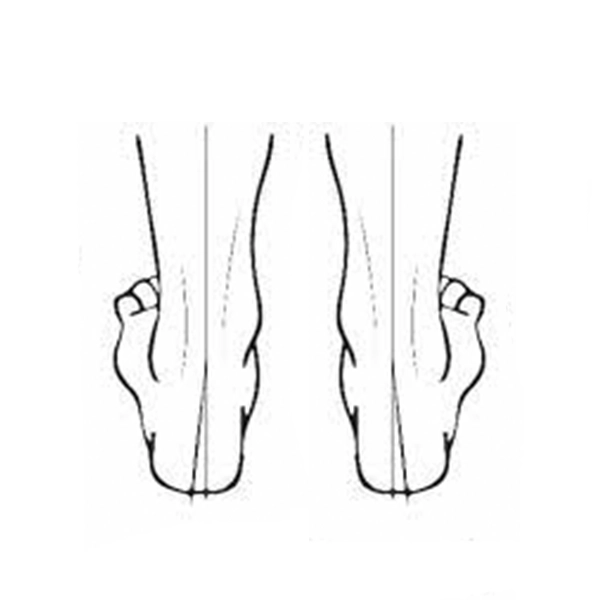
Feet neither valgus nor varus
Normal anatomy
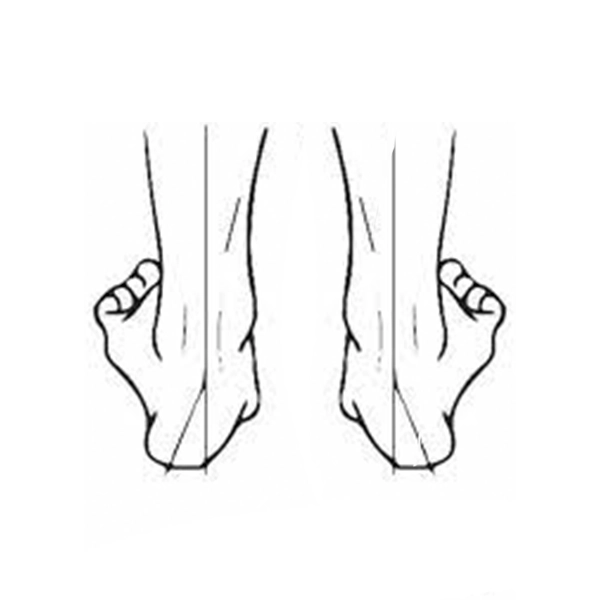
Flat feet

Symptoms of varus foot

People with varus feet often describe:

  • Pain on the outside edge of the foot
  • Outward shoe wear
  • pain that can radiate up to the ankles, knees, and hips

The clinical signs of varus foot most often include pain on the outer edge of the foot, especially after prolonged walking or standing. Abnormal shoe wear on the outside is frequently observed, as well as an outward tilting of the heel, indicating excessive pressure on the lateral part of the foot. The arch of the foot is often more pronounced (high arch), which limits shock absorption.

In more advanced forms, this imbalance can lead to pain that travels up to the ankles, knees, and even hips, by disrupting the overall alignment of the lower limb and posture.
In children, this particularity is often painless but warrants monitoring to ensure normal development. In adults, pain is more frequent, notably due to repeated strain and the foot's lack of natural cushioning.

Causes of clubfoot

Several factors can contribute to the development of clubfoot:

  • Genetics A genetic predisposition can influence foot shape, particularly a more pronounced arch.
  • Muscle imbalances: An imbalance between the intrinsic and extrinsic muscles of the foot and ankle can lead to excessive pressure on the outer edge.
  • Neurological disorders Certain neurological conditions can disrupt muscle control and lead to an outward turning of the foot.

What treatments are there for varus feet?

  • Orthotic insoles: They help rebalance support by limiting overloading of the outer edge of the foot and improving overall alignment. They also promote better cushioning, which is often insufficient in cases of varus foot.
  • Strength training exercises: Exercises targeting the muscles of the foot and ankle, particularly the intrinsic stabilizing muscles, can help correct imbalances and improve stability.
  • Stretching: Regular calf and arch stretches help maintain good mobility and limit tension caused by foot stiffness.
  • Suitable footwear: It is recommended to favor shoes that offer good cushioning and appropriate lateral support, in order to compensate for excessive pressure on the outside of the foot.

Varus foot can lead to an overall body imbalance, as weight is primarily borne on the outer part of the foot. The foot forms the base of this chain. When weight distribution on the ground is uneven, certain joints—particularly the ankles, knees, and hips—can be overstressed, leading to pain and postural compensations.

In this context, some people choose to act on their movement base.

Insoles designed to improve the quality of foot support can help provide more even stress distribution during walking or daily activities. The goal is not to treat a pathology, but to support the body by offering a more stable base that is more aligned with its natural biomechanics.

Do you play a sport and have questions about your footwork?
Select your activity to discover New Equilibre insoles designed to support movement.

Choose a sport

Acting on supports: the role of footings

The foot is the first point of contact with the ground and plays a central role in how stresses are transmitted to the rest of the body during walking or everyday movements.

How do insoles affect the foundation of movement?

Influence on posture and overall alignment: The insoles are designed to support the foot in its natural position and promote a more balanced distribution of pressure. By acting at the base of the body, they can influence overall posture and how forces are distributed during movement.

Mechanical stress distribution: By improving the quality of ground support, insoles help to distribute stress more evenly across the feet, legs, and pelvis. This approach aims to limit localized overloads related to certain postural habits or repetitive movements.

Stability while walking A more stable base allows for smoother, better-controlled walking. The insoles support the foot's roll and contribute to better movement continuity, without trying to stiffen or restrict natural dynamics.

Ground Impact Management The materials used in the design of the insoles help to manage the impact when contacting the ground. This impact management is part of a logic of functional comfort, especially during daily activities involving walking or prolonged standing.

New Equilibre Insoles

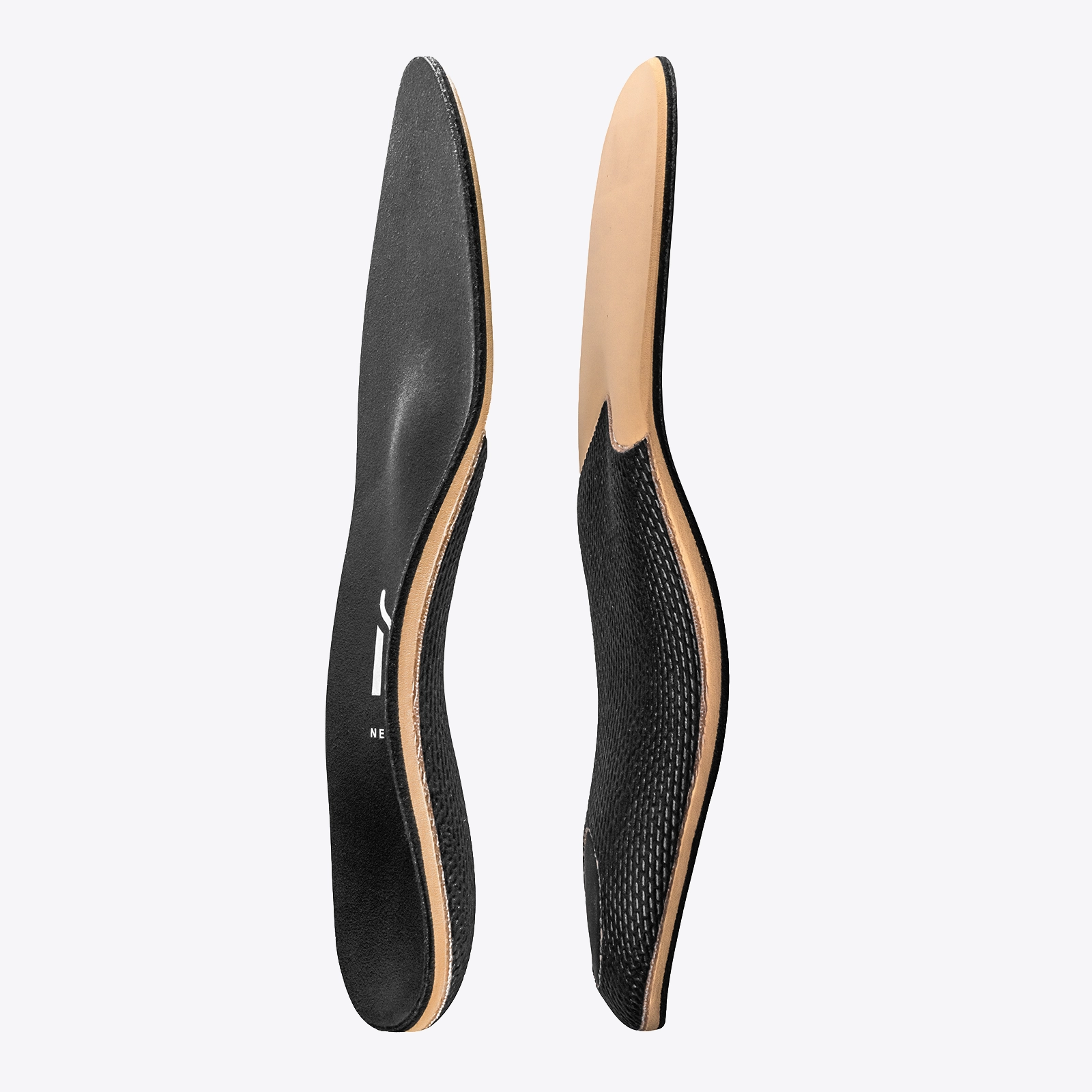
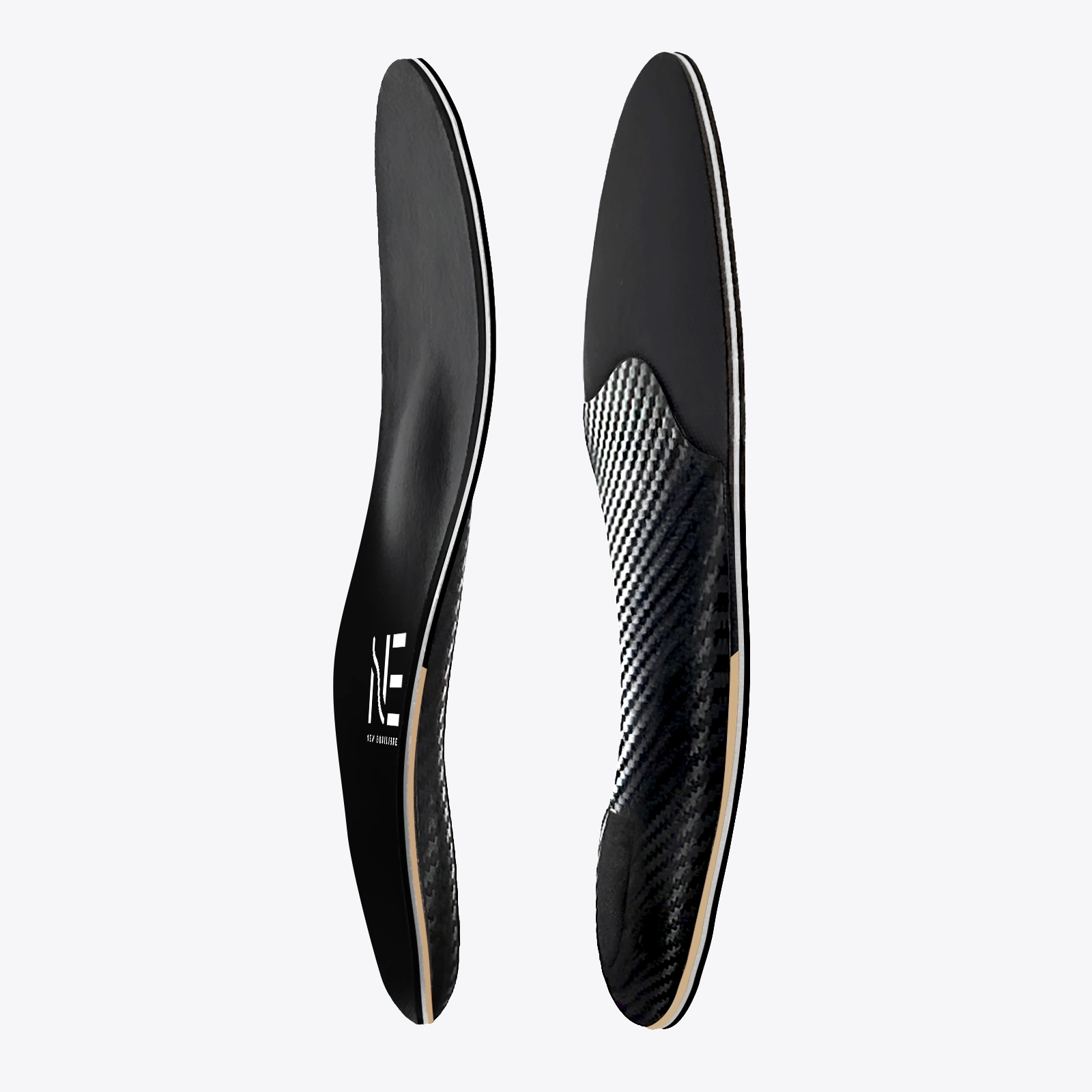
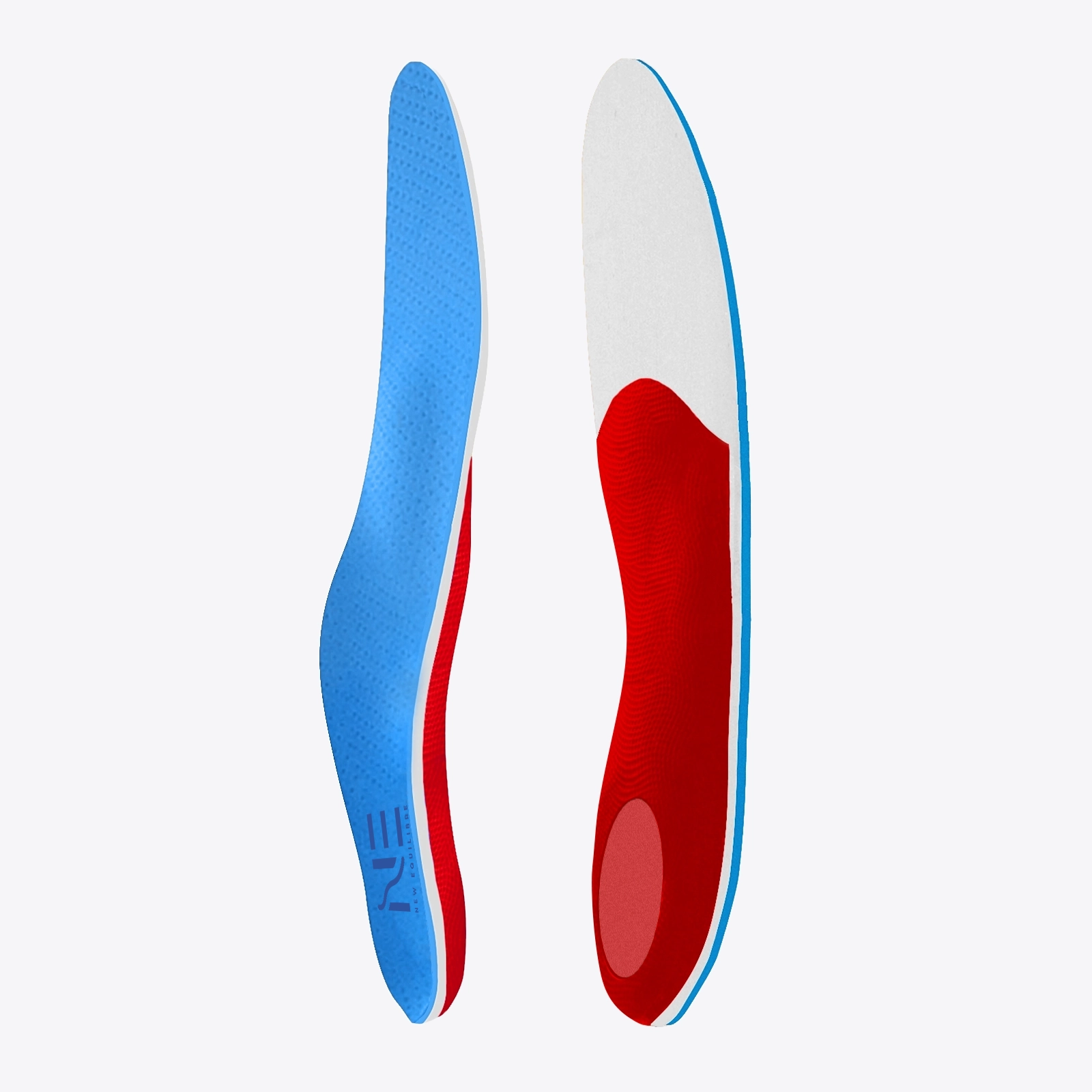
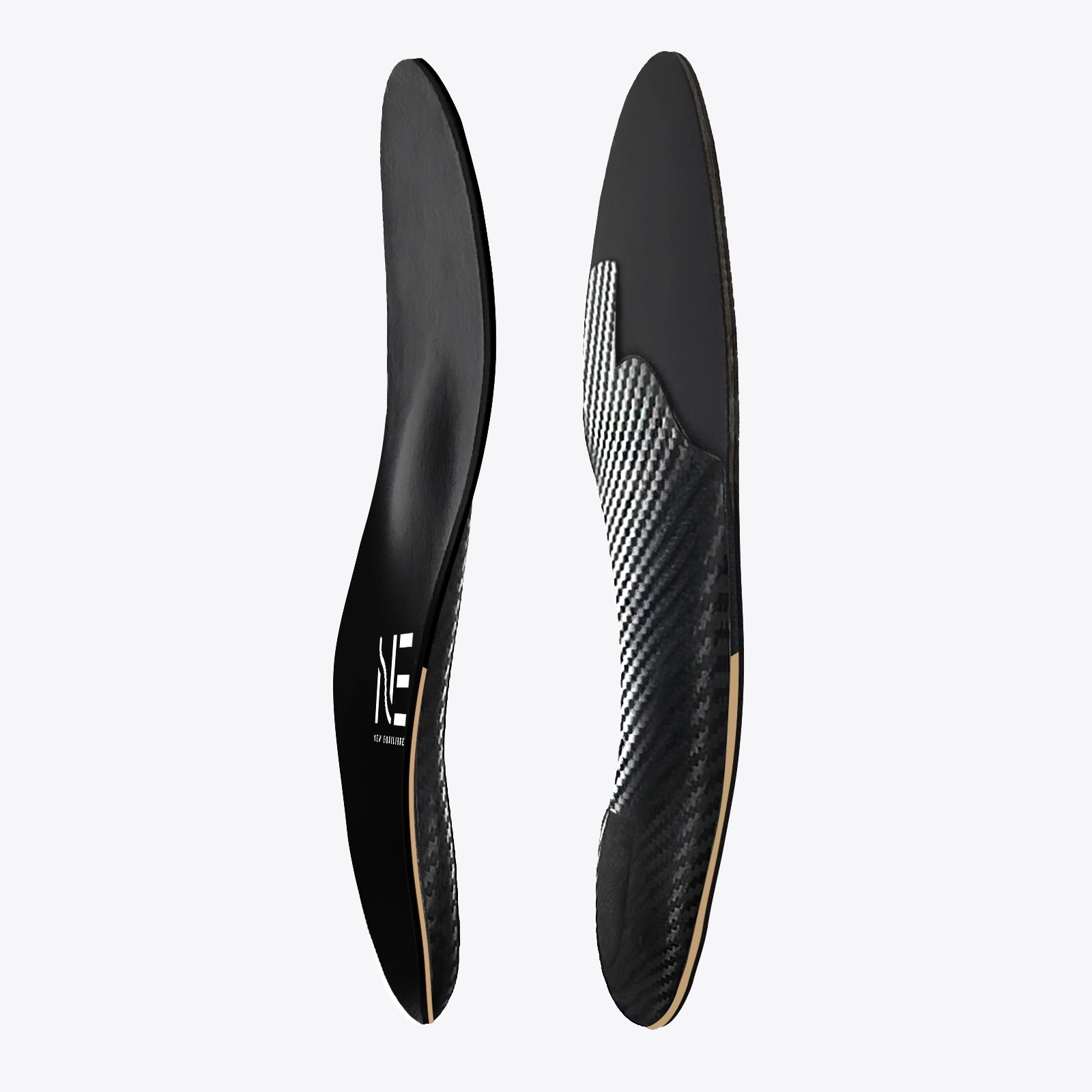
The New Equilibre Insoles They are designed based on over 35 years of biomechanical foot analysis in orthopedic practices. They easily fit into everyday or sports shoes and aim to support movement while respecting the natural anatomy of the foot.

«It all starts with the foot.»
New Balance, a new impetus.

Gérard Forlini orthopedic surgeon

Article written by Gérard Forlini
OrthopedistOver 35 years of experience in foot care (since 1988)
Over 5,000 patients supported each year in the practice.

In collaboration with Maxime ForliniFounder of New Equilibre, specializing in the design of insoles and foot support analysis

    0
    Cart
    Your cart is empty.Return to shop
      Calculate Shipping
      Apply Coupon

        Size Guide
        Tops

        METHOD 1: Measure Your Clothes

        Length
        Place the end of the ribbon next to the collar at the top of the product (highest point of the shoulder). Pull the measuring tape down to the bottom of the product.

        B. Width
        Place the end of the ribbon at the underarm seam and pull the ribbon through the product to the opposite underarm seam.

        Top size guide
        Size NE Length (cm) Width (cm)
        S 70 50
        M 72 53
        L 74 56
        XL 76 59
        2XL 78 62

        METHOD 2: Measure Yourself

        Length
        Measure from the end of the collar (highest point of the shoulder) to the bottom of your garment.

        B. Chest
        Measure your bust at the fullest part. Keep the tape horizontal.

        Custom Measurements Top Size Guide
        Size NE Length (cm) Chest width (cm)
        S 70 76-85
        M 72 86-95
        L 74 96-105
        XL 76 106-115
        2XL 78 116-125

        14 days,
        Money-back guarantee

        At New Equilibre, we believe it's impossible to know if a pair of insoles is right for you without trying them in real life. Sometimes it takes a few days to adjust.

        That's why we decided to go further: You can try our insoles for 14 days, even if they've been worn – and if you're not completely satisfied, we'll refund you.

        We designed our products with high standards: premium materials, optimal support, cushioning technology, and ergonomic design. We know that once worn, they will be adopted.

        Our promise is simple: Try risk-free, decide freely.

        Try them today, without hesitation: your feet will thank you!

        View exchange, return, and refund conditions

        Return form

        Important before requesting a return:


        New Equilibre insoles are designed to actively support your arches. During the first few days of use, it is therefore common to feel:
        • A feeling of a “lump” under the foot
        • unusual pressure in the arch of the foot
        • a different feeling from your old insoles or shoes


        In the vast majority of cases, it's simply the foot adjusting to the rebalancing of the support. This sensation gradually disappears after a few hours or days of wear. We therefore recommend a trial period of a few days before any return request.

        You get a 14-day trial to test your insoles under real-use conditions.
        However, if you experience significant and persistent pain, you should not force yourself to wear the insoles. In rare cases, this could be due to an incorrect shoe size or a morphological adaptation issue. Our team remains available to assist you if needed.
        Need help choosing your insoles?


        We will ask you a few questions to determine which insoles best suit your needs.


        Estimated time: 2 minutes
        Thank you for your answers.
        Please provide your contact information so we can get back to you as soon as possible.
        The New Equilibre team wishes you a great day!

        New Equilibre

        High-tech orthopedic insoles, developed by French orthopedists.,
        which have required over 35 years of research and in-house testing.

        Made in France
        Made in France

        New Equilibre's orthopedic insoles are a subsidiary of Forlini Orthopédie. They adapt to all morphologies, flat or hollow feet, valgus or varus feet, and to all types of footwear, for the city, for work and for sport.

        Musculoskeletal system relieved

        The concept is based on thermoformed insoles molded onto perfectly balanced, physiological foot modules. So when your feet rest on New Equilibre orthopedic insoles, your whole posture is stabilized.

        The molded shape of New Equilibre insoles increases the supporting areas of your feet on the ground and redistributes your body's weight over a larger surface. All areas of your foot are thus supported by the insole, and it is this maximum support that relieves all your plantar pain and that of your entire spine.

        Stability gain

        New Equilibre orthopedic insoles stabilize your heel with their integrated heel cups at the back of the insole. They also stabilize your midfoot with internal and external arch supports and forefoot support. Finally, they harmoniously distribute pressure across your metatarsal heads. The forefoot is also more stable, thus promoting excellent foot propulsion.

        It's very important to realize that our feet support our entire skeleton within a few square centimetres.
        New Equilibre insoles allow your body to regain its lost balance.

        Resting joint positions

        With the foot stabilized, the ankle, knee, hip and spine are relieved of stress.

        Spreading your body's weight over a larger surface area reduces the fatigue of muscles and tendons. This increases their capacity for recovery and facilitates good performance by all musculo-tendinous groups.

        Size Guide

        To help you choose your size, we recommend removing the original removable insole from your shoes, and measuring from heel to toe.

        Next, compare the size of your original insole with the Insole size New Equilibre via the table below. Then select the corresponding size when ordering.

        Size Guide

        Delivery Options

        For deliveries to France:

        Standard Delivery (Colissimo)
        from the
        Offer from €80 purchase
        Express Delivery (Colissimo)
        from the
        5,00€
        Urgent Delivery (Chronopost)
        from the
        21,00€

        For deliveries outside of mainland France:
        Read more >